Trauma-Informed Design & Research Training
Build the skills, language and practices your team needs to work ethically, safely and sustainably in complex human contexts.
For design, research and change teams
Why this matters
Stress and distress can show up in research, co-design, stakeholder engagement and change work. When teams are not equipped to respond well, it can lead to loss of trust, ethical risk, disengagement and unnecessary strain on staff.
Trauma-informed practice offers a practical, non-clinical framework for helping teams work with more care, clarity and steadiness.
What teams receive
This program supports teams to build the capacity to stay present, responsive and connected when work is complex, pressured or emotionally charged.
Teams learn to recognise stress and activation in professional settings, design safer engagement processes, and respond with clarity and care when distress arises.
Learning is applied directly to your team’s context through reflection, discussion and shared practice development.

Teams finish with practical tools they can apply the next day.
Outcomes for teams
After this program, teams are better able to:
- Stay present and think clearly under pressure
- Recognise activation in themselves and others
- Design safer and more trauma-aware engagement processes
- Build shared language and practical agreements for team practice
- Respond to distress with greater confidence and care
After this program, teams are better able to stay present, think clearly, and work collaboratively when things are complex, pressured, or emotionally charged.
What teams say after the training
“One of those rare workshops that actually changed how we show up in our work.”
— David Evans, Beyond Blue
Program structure
Small cohorts support spaciousness, trust and embodied learning.
We move slowly enough for people to feel safe, reflect deeply and practise new skills.
Can be delivered face to face in Sydney or Melbourne upon request.
Now offered with video content to cater for global audiences.
The program is usually delivered as:
- Four online modules
- 2.5 hour duration
- Cohorts up to 12
The four modules
Foundations of Trauma-Informed Practice
- What trauma-informed practice is (and is not)
- Safety, consent, choice, and ethical responsibility in professional contexts
- Why “difficult behaviour” is often a nervous system response
- Team reflection: how might we work in more trauma-informed ways?
This module introduces the foundations of trauma-informed practice and why it matters in professional, research and engagement contexts. Participants explore how safety, power, consent and choice shape people’s experiences at work, and how trauma-informed practice differs from clinical or therapeutic approaches.
Key focus:
Trauma, Stress and the Nervous System at Work
- Common patterns of activation, withdrawal, and over-drive in teams
- Team wellbeing and risks of secondary trauma
- Nervous system responses in everyday work situations
- Micro-practices for steadiness and clarity
- The role of presence, tone, and pacing in shaping group dynamics
This module builds practical understanding of how stress and nervous system responses show up in workplace behaviour, communication and group dynamics. The focus is on recognising patterns of activation without blame or diagnosis, and understanding why these responses are adaptive rather than personal failings.
Key Focus:
Designing Trauma-Informed Research and Engagement
- Trauma-informed approaches to research, design, and engagement
- Planning for safety across the engagement journey
- Language, materials, and facilitation choices that reduce strain
- Designing for care, dignity, and sustainability rather than urgency
This module explores how trauma-informed principles can be applied to research, design and engagement practices. Participants examine how everyday methods, processes and assumptions can unintentionally cause harm, and what can realistically shift within organisational constraints.
Key focus:
Navigating Distress and Integrating Practice
- Guiding principles for responding to moments of distress
- Referral, and appropriate organisational responses
- Optional grounding and somatic practices for professional settings
- Reflecting on learning and identifying practical practice changes
- Developing a simple trauma-aware engagement or distress protocol
The final module supports teams to respond when distress arises and to integrate learning into their real work context. Participants are introduced to guiding principles for responding with care and clarity, alongside optional, consent-based grounding practices and tools for planning next steps.
Key focus:
“If there’s one thing to invest in this year, it’s this.”
— Nataliya Senytsya, Strategic Service Designer
Who is this training for
This program is designed for:
- Design researchers
- Service designers
- UX, CX and content designers
- Innovation and strategy teams
- Public sector design and transformation teams
- Community and lived-experience engagement
- Evaluation and insights teams
- Any team working with people in moments of stress, sensitivity or uncertainty
This training is focused on real-world application, grounded in the actual contexts, projects and pressures teams are navigating.
About your facilitator
Jax Wechsler is a trauma-informed strategic designer and facilitator with over 20 years’ experience working in change, complexity and systems. She supports design, research and change teams to work more ethically, clearly and humanely when engaging with lived experience, power and uncertainty.
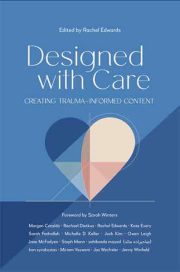
Jax brings more than 15 years of experience teaching innovation and change in university and organisational settings, alongside the past five years focused specifically on trauma-aware and nervous-system-informed practice. She has trained over 800 practitioners globally and contributed a chapter to Designed with Care: Creating Trauma-Informed Content.

“Design and change work always shapes human experience. Trauma-informed practice helps teams stay attentive to power, impact and care while working inside complex systems.”
Our change partners



















Testimonials
What people are saying
What's included
- Four live 2.5 hour core sessions
- Resource sheets and reflection prompts
- Practical tools, scripts and guided practices
- Space for team discussion and reflection
- A co-created charter to guide practice

Investment
Ideal for teams working in high-ambiguity, emotionally charged or systemic contexts
This training is tailored to your team, context and delivery format.
Pricing is shared on inquiry once we understand what would be most useful.
Further reading
Why is Trauma Informed practice important?
Want to discuss brining this to your team?
Let's talk
Whether you’re exploring training for your team, a consulting review, or something more tailored, the best first step is a conversation.
Book a conversation or leave us a message.